March 6, 2026
AI MasterClass
Zero → Production. Fast.
Sandwich: Why Taste is the New Scarcity
A quick note before we dive in. Starting this month, the newsletter is moving from fortnightly to monthly. Not because there's less to say — if anything, the opposite. But the pace of what's happening in AI right now rewards depth over frequency. We'd rather give you one piece a month that changes how you think than two that keep you merely informed. Quality over quantity. You'll hear from us less, but it'll hit harder.
For years, the debate around AI has been stuck in a loop: can it really think, or is it just pattern matching? That question is starting to feel quaint. The better question — the one that actually matters for your career, your business, your sense of what it means to be good at something — is this: if machines can now do brilliant work, what kind of human brilliance still counts?
Three things landed on my desk this month that, taken together, sketch an answer. A paper by Don Knuth. An old essay by Paul Graham. And a new economic framework that connects them both. The thread running through all three is a single word: Taste.
The Shock: Knuth, Claude, and an Open Problem Solved in One Hour
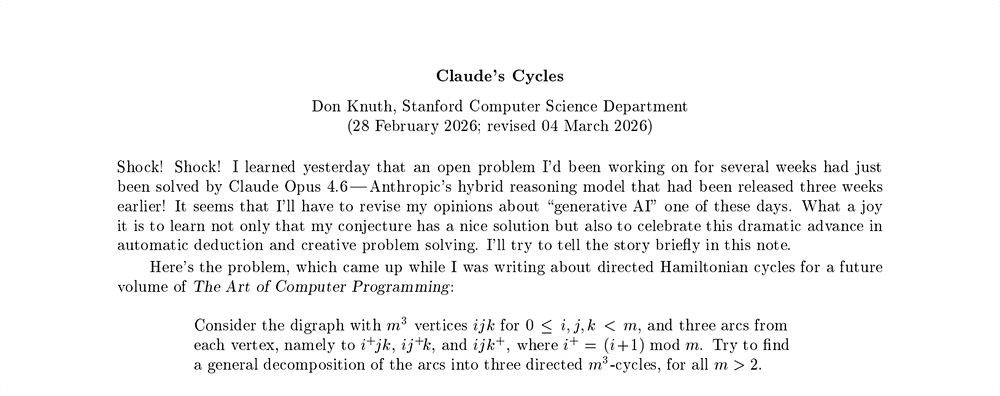
Donald Knuth has been writing The Art of Computer Programming since 1962. He is not a man who rattles easily. So when he opens a paper with "Shock! Shock!" — you stop what you're doing.
On February 28, Knuth revealed that an open problem he'd been wrestling with for weeks — splitting a complex network of one-way paths into three perfect loops, each visiting every single node exactly once — had been solved in roughly one hour by Claude Opus 4.6. What shook him wasn't just the answer. It was the process.
Claude didn't guess. It hunted. It started with brute force — too slow. Tried linear variants — dead ends. It pivoted to recognizing the underlying structure as a Cayley digraph, a move Knuth called "really impressive." At exploration 27, it found a near-miss: a rotation trick that worked for every m tested, with conflicts at only a handful of vertices. Tantalizingly close. Then it proved those conflicts were unresolvable — and killed its own approach.
Thirty failed explorations. Each documented, analyzed, discarded. At exploration 31, Claude stripped everything back and produced a compact program that generated perfect decompositions for every odd m tested, up to 101. Knuth verified it, proved it correct, then generalized it — showing Claude had found one of exactly 760 valid decompositions of its kind. Days later, GPT-5.3-Codex cracked the even case up to m = 2,000. A graph with 8 billion vertices.
When the man who defined the field calls this a "dramatic advance in creative problem solving," we're past the autocomplete debate now.

The Fortress: Paul Graham's Essay on Taste
Paul Graham argued in "Taste for Makers" that good design is not subjective — it is simple, timeless, and hard-won.The recipe for great work is "very exacting taste, plus the ability to gratify it"—meaning taste alone isn't enough; you also need the skill to bring it to life.
Look at Claude's process through that lens. It redesigned its approach thirty-one times. It discarded ornate solutions for structural ones. The final output wasn't a wall of case analysis — it was a few clean conditionals that revealed the underlying mathematics. The kind of solution mathematicians call beautiful.
Here's the twist Graham couldn't have anticipated: the ability to gratify taste — to do the hard execution work — is exactly what AI is commoditizing. What remains scarce is the taste itself.
The Sandwich: Economics of AGI, Claude MCP/Code, Verification Bottleneck
A recent paper on the economics of AGI puts numbers to this intuition. Two cost curves are colliding: the cost to automate, decaying exponentially, and the cost to verify, anchored in human biology. Intelligence is abundant. Verification is the bottleneck.
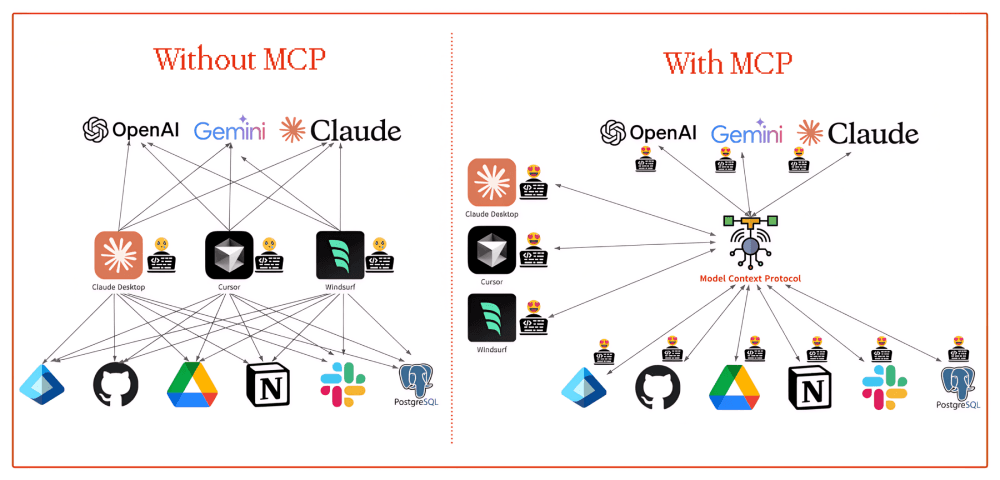
Claude produced 31 explorations. Without Knuth — without decades of accumulated judgment — the brilliant one would have been indistinguishable from the broken ones. Tools like Claude MCP and Claude Code have turned AI from a chat box into an agent that writes code, runs tests, and iterates — exactly as it did across those 31 explorations.
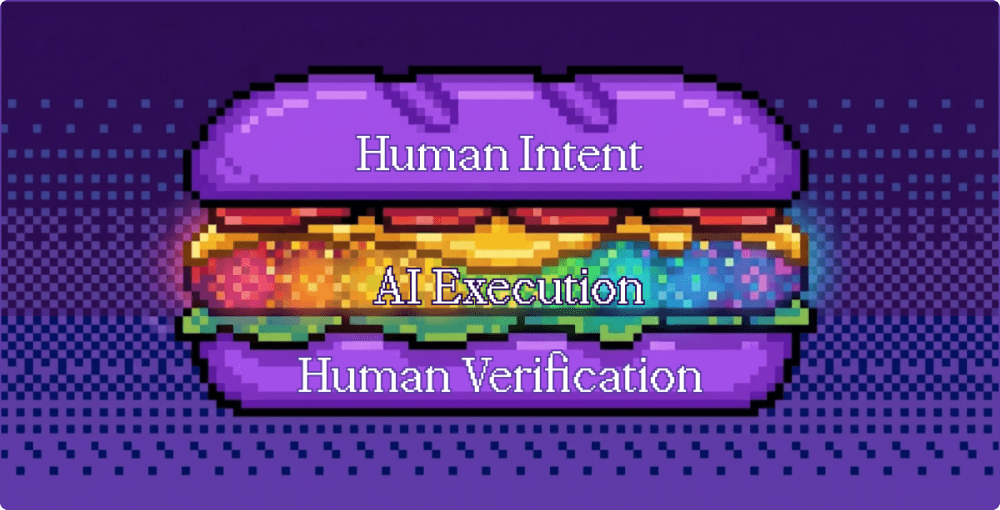
The workflow that emerges is what one framework calls the Sandwich:
Human Intent (Top): You define the why.
Machine Execution (Middle): AI handles the complex, high-speed how.
Human Verification (Bottom): You certify the outcome and stand behind it.
The danger is real: as we outsource execution, we risk hollowing out the judgment pipeline. If the next generation never wrestles with hard problems, who develops the taste to verify what the machines produce?
That question is no longer theoretical. It's operational.
This is what we work on in the AI Masterclass. Not prompting. The hard, compounding skill of knowing what to build, how to steer the machine, and when to trust the output.
Cohort 4 is now open for enrolment. This is our last session before a two-month operational break — we're stepping back to refine our systems and make sure the curriculum stays at the frontier. If you've been waiting, this is your window before summer.
Develop your taste. It's the one thing that isn't getting cheaper.